
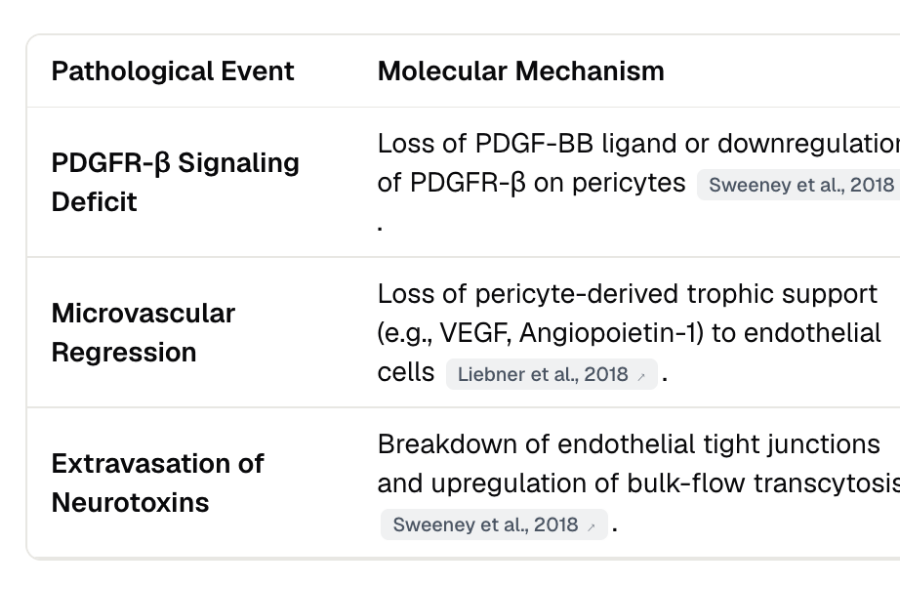
Recognizes the scientific objects in a question
Purna AI separates diseases, mechanisms, biomarkers, cell types, assays, and interventions before answering, so the response follows the biology rather than matching keywords.
Ask open-ended research questions and get answers that understand biological terms, evidence, mechanisms, and the formats scientists use to make decisions.
Purna AI separates diseases, mechanisms, biomarkers, cell types, assays, and interventions before answering, so the response follows the biology rather than matching keywords.
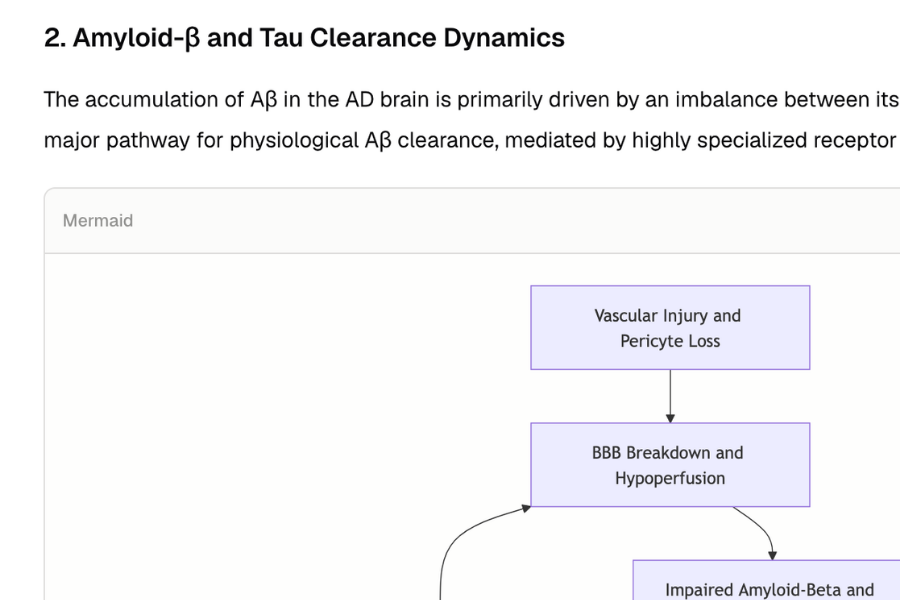
Ask for a table, chart, Mermaid diagram, pathway map, or ranked hypothesis list while keeping the underlying claims and evidence tied to the same research thread.
Purna AI treats experiment design, FTO analysis, disease research, pathway review, and target assessment as different reasoning tasks with different output needs.
Start with a natural-language question about a gene, pathway, disease, assay, mechanism, or paper. Purna AI turns the request into a scoped scientific response instead of a broad generic answer.
Useful when the work is exploratory and the question still needs to be narrowed.
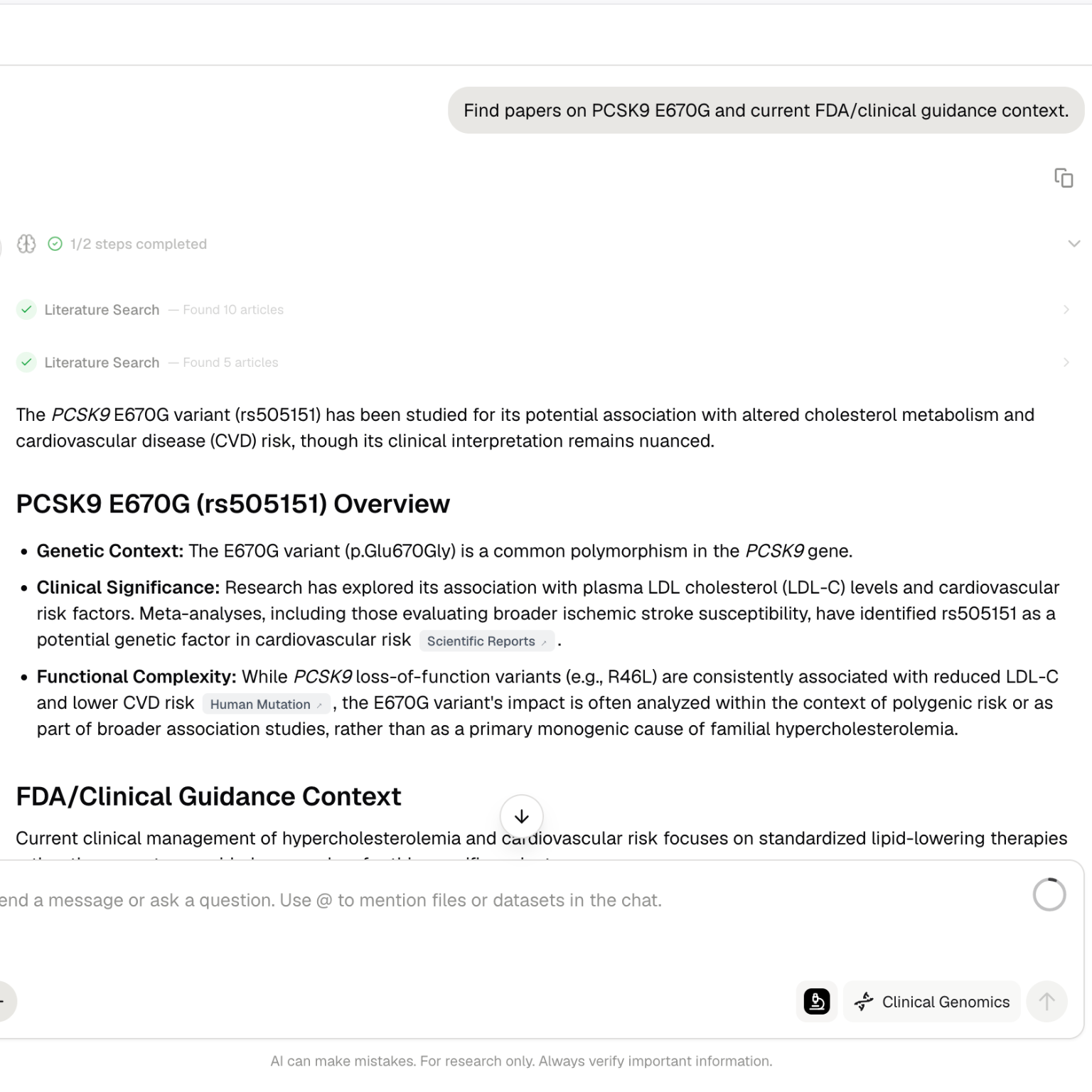
Move from prose into comparison tables, pathway maps, evidence charts, Mermaid diagrams, ranked lists, or figure-ready summaries when the answer needs more structure.
Keep the same answer thread while changing the output from explanation to table, diagram, or plan.
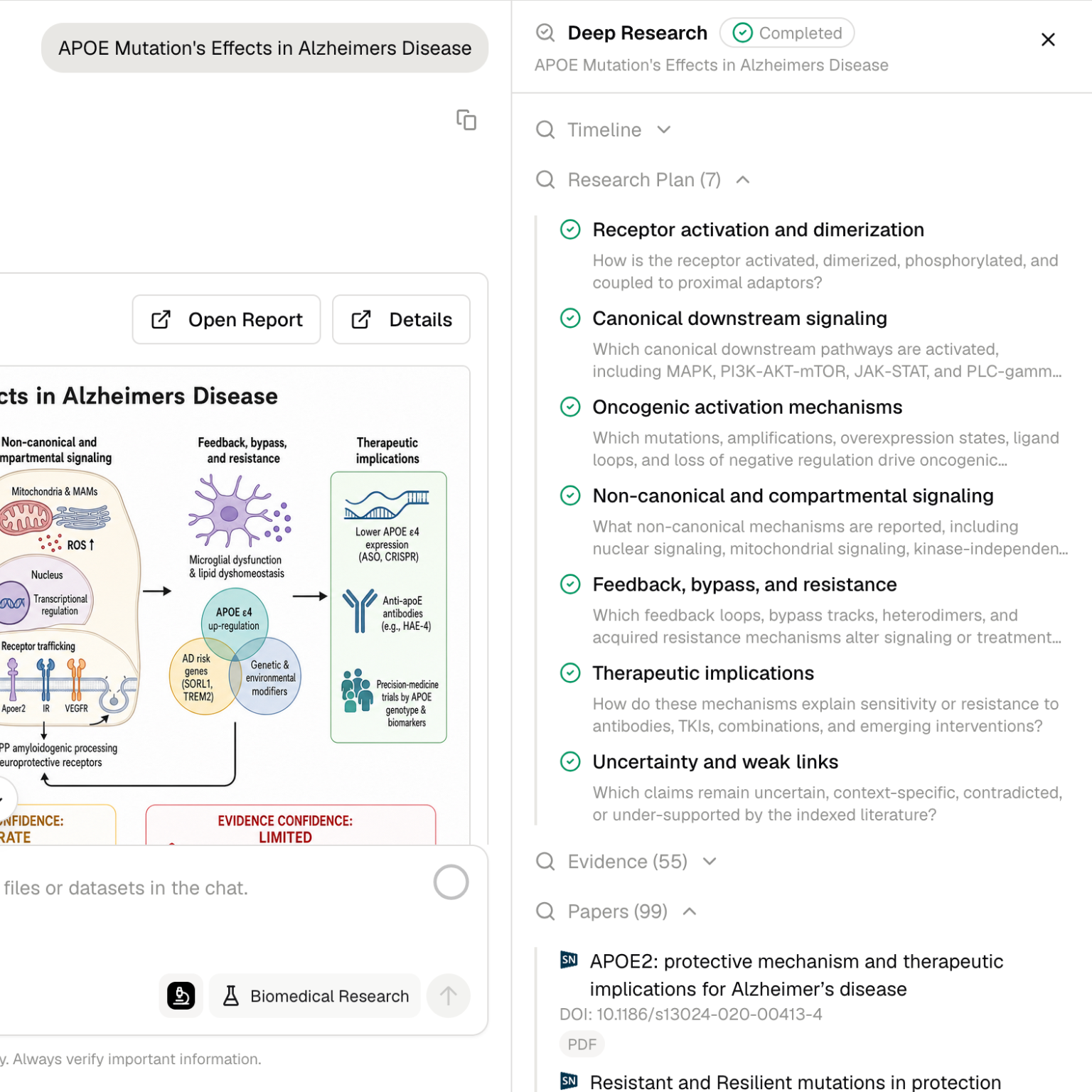
Run protein modeling and structure prediction with Boltz-2, AbLang, and ESM, or enzyme design workflows with RFdiffusion and ProteinMPNN. Results return as structures, scores, candidate designs, and interpretation summaries.
Capabilities are selected explicitly, so users can choose the right model family for structure prediction, sequence analysis, or design generation.
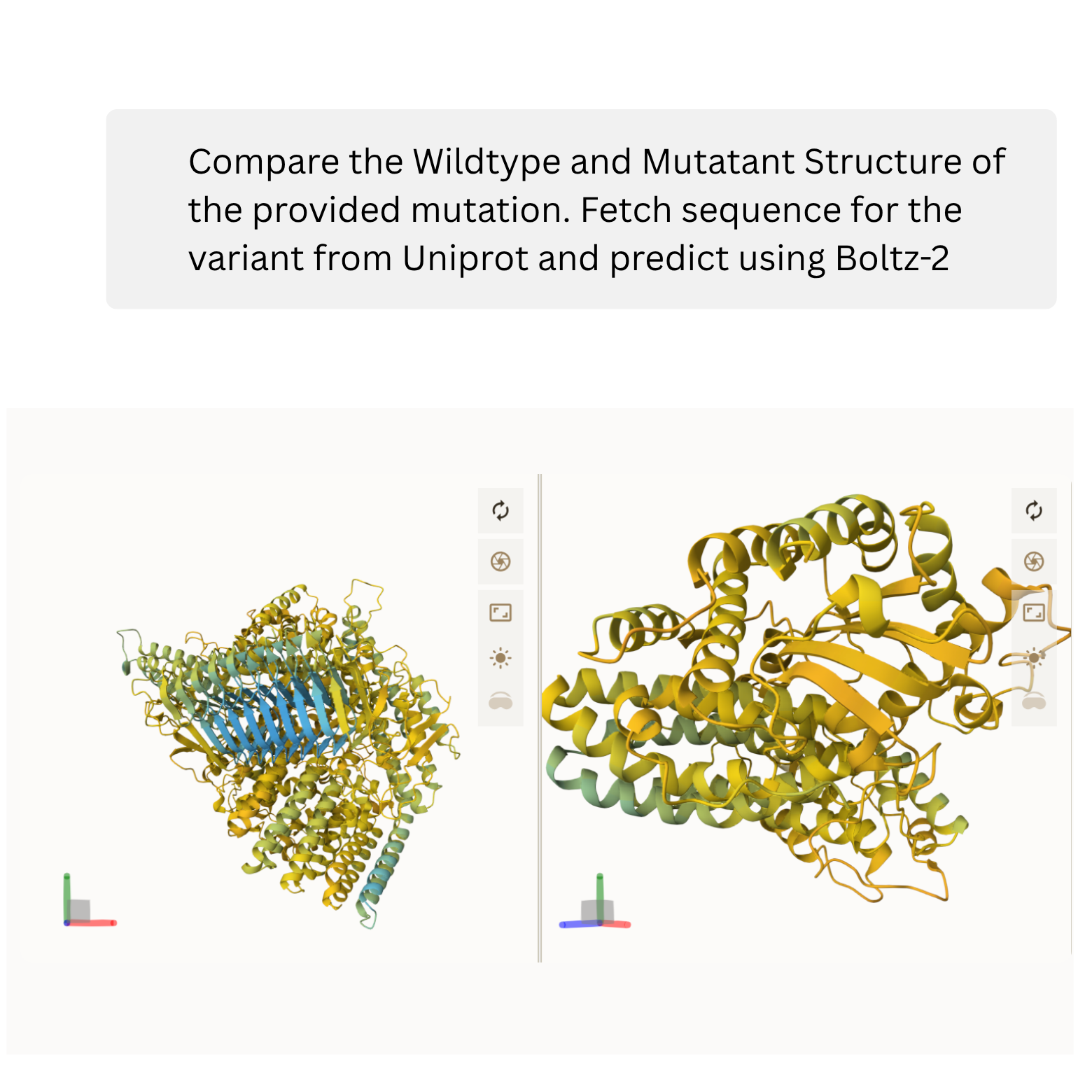
Bring literature, ontologies, pathways, target annotations, disease associations, compounds, variants, and workspace files into the same research surface.
Use database-backed context without leaving the chat to manually reconcile every source.
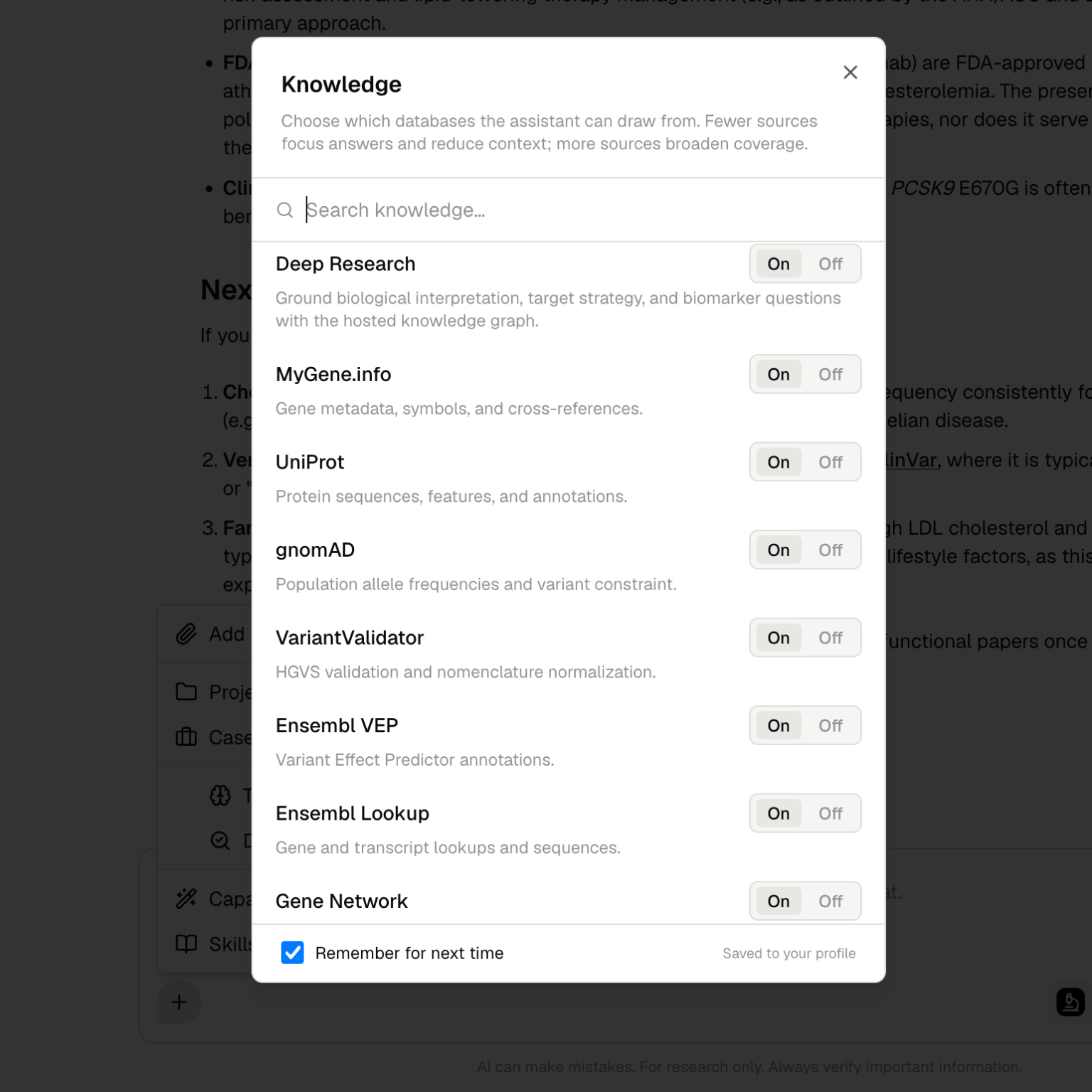
Use Biomedical Research for interactive work: ask, inspect, reshape, and carry the answer forward into analysis, files, or writing.
Describe the biology, evidence gap, mechanism, experiment, or decision you want to understand.
Pull in relevant literature, database context, workspace files, and connected biological relationships.
Request prose, tables, charts, diagrams, ranked hypotheses, experiment plans, or a long-running capability run.
Continue into pathway review, protein modeling, enzyme design, disease context, figure planning, writing, or follow-up analysis.
Purna AI keeps research, computation, files, and writing connected so teams can move faster without losing scientific traceability.
Get Started