
Target rationale with matching readouts
Connect disease biology, pathway relevance, perturbation studies, and candidate biomarkers into a target story your team can test.
Purna AI helps R&D teams connect disease biology, pathway context, omics signals, literature, assays, and validation strategy so target hypotheses and biomarker readouts advance together.
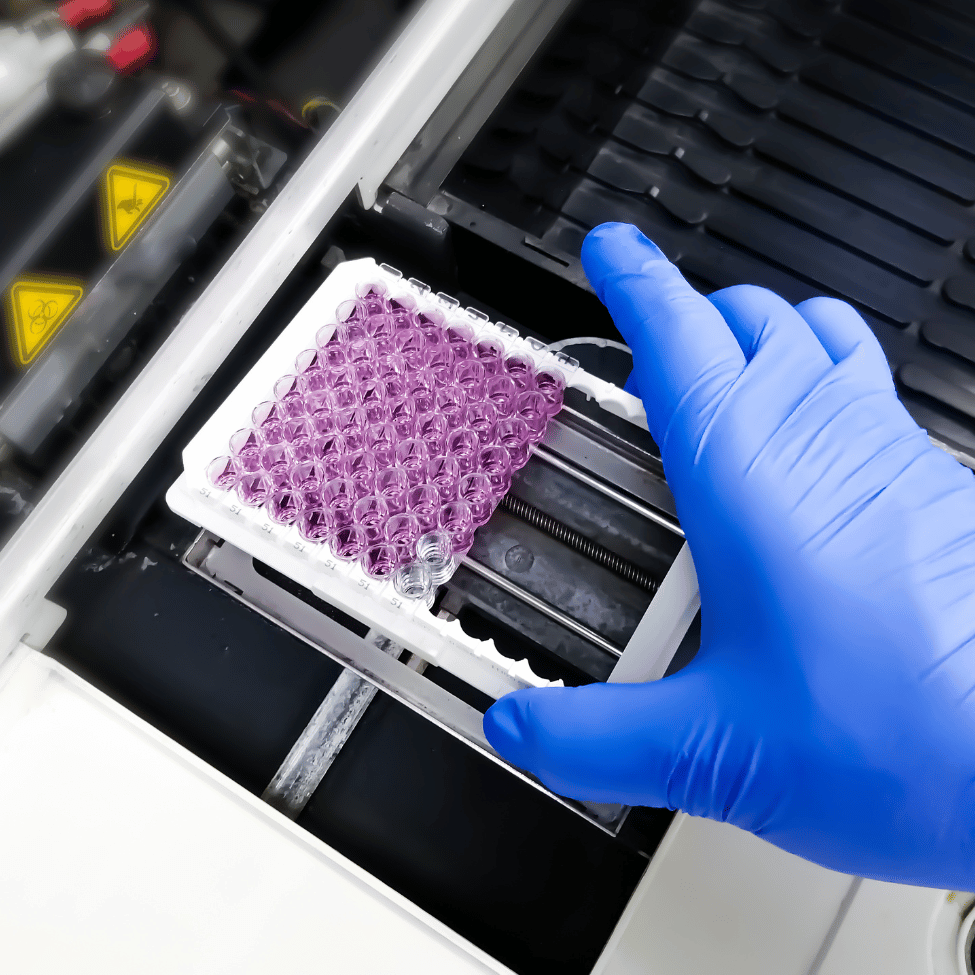
Connect disease biology, pathway relevance, perturbation studies, and candidate biomarkers into a target story your team can test.
Rank targets and markers by biological plausibility, reproducibility, tissue context, assay feasibility, and supporting literature.
Turn hypotheses into perturbations, controls, readouts, replication requirements, and decision criteria.
Connect disease association, pathway role, perturbation evidence, model systems, and literature into a structured rationale for why the target should matter.
Move beyond a list of significant signals by comparing mechanism, disease relevance, tissue context, reproducibility, and assay feasibility.
Connect biomarker candidates to pathways, cell states, perturbations, disease mechanisms, and reported experimental evidence.
Move from a target narrative to concrete perturbations, positive and negative controls, phenotypic readouts, orthogonal assays, and decision criteria.
Summarize evidence, gaps, risks, validation experiments, and go/no-go criteria in a concise artifact built for scientific and portfolio review.
No scripting, no config files, no Slack-pinging the bioinformatics team.
“Evaluate this target in fibrosis and connect pathway evidence to the biomarkers that would prove engagement.”
“Rank these candidate biomarkers by biological relevance, assay feasibility, and tissue specificity.”
“Design a validation plan with perturbations, controls, readouts, and go/no-go thresholds.”
“Find studies where this biomarker tracks target modulation and summarize the strongest limitations.”
“Suggest marker combinations that could identify responders for this mechanism of action.”
“Create a target-biomarker validation brief for R&D review with risks and next experiments.”